The Rockefellers' Bassett Hall
Tour the place that John D. Rockefeller Jr. and wife Abby Aldrich Rockefeller called their Williamsburg home. Glimpse the lives of two of America’s most prominent figures and their involvement in the Restoration of Williamsburg. Explore rooms uniquely furnished with Mrs. Rockefeller’s folk art, 18th-century antiques, and 20th-century accessories.
An Historical Home Inspires
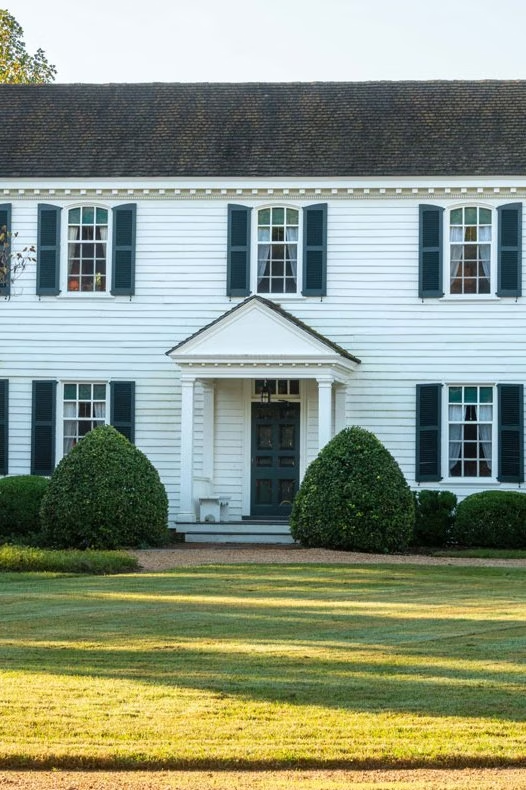
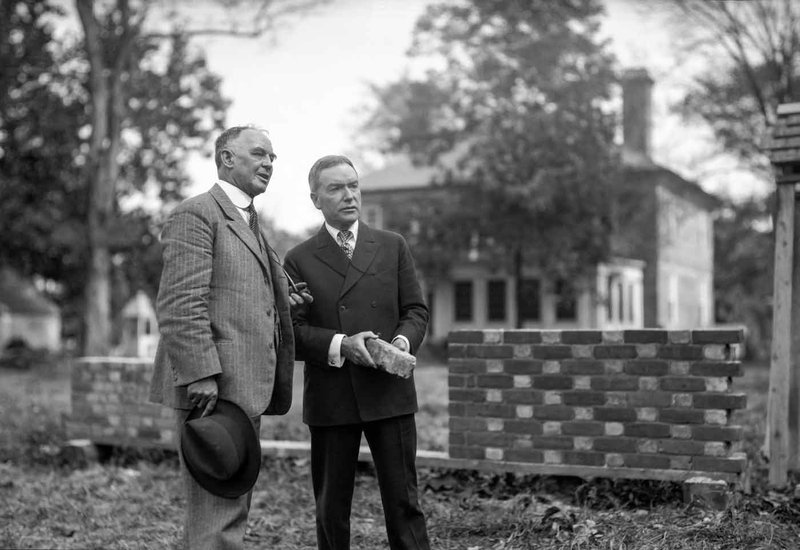
Bassett Hall was one of the 88 original surviving buildings that Rev. Dr. W.A.R. Goodwin, the visionary behind Colonial Williamsburg’s restoration, showed to philanthropist John D. Rockefeller Jr. in 1926 to generate his interest and funding for the ambitious plan. A two-story 18th-century white frame house nestled on 585 acres of lawn, gardens, and woodlands, Bassett Hall was built between 1753 and 1766 by House of Burgesses’ member Philip Johnson. It was purchased around 1800 by Virginia legislator and congressman Burwell Bassett, a nephew of Martha Washington. Colonial Williamsburg purchased the property in 1927 and it became the Rockefellers’ home in 1936.
A Restful Retreat
Bassett Hall has been restored to its appearance when the Rockefellers lived there, 1936-1948. To furnish the home, Abby Aldrich Rockefeller filled the interior spaces with a blend of antiques and early American folk art. Since the 1920s, she had been actively purchasing compelling pieces by American artisans who had never received formal training in their craft. Abby was among the first to champion the ingenuity and craftsmanship of American folk artists as an important artistic expression. Her seminal collection eventually formed the core of Colonial Williamsburg’s Abby Aldrich Rockefeller Folk Art Museum that opened in 1957.
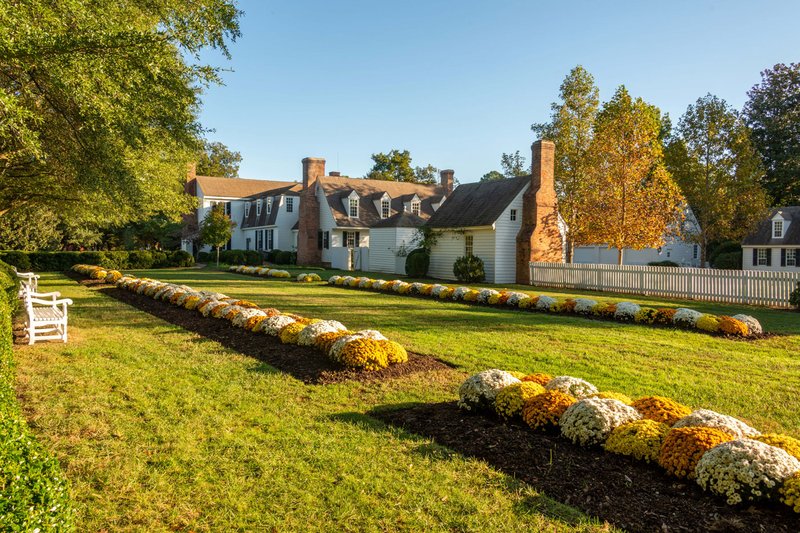
Outside the home, American landscape architect Arthur Shurcliff redesigned the grounds and integrated plantings that accentuated the property when the Rockefellers visited every spring and autumn. This inviting home offers a personal glimpse into the lives of the Rockefellers’, whose generosity enabled the preservation of Virginia’s colonial capitol.